
Aether AI Launches Non-Profit Arm Nusantara AI Institute Alongside Sandiaga Uno & Ambassador Blake

Published
Mar 28, 2026

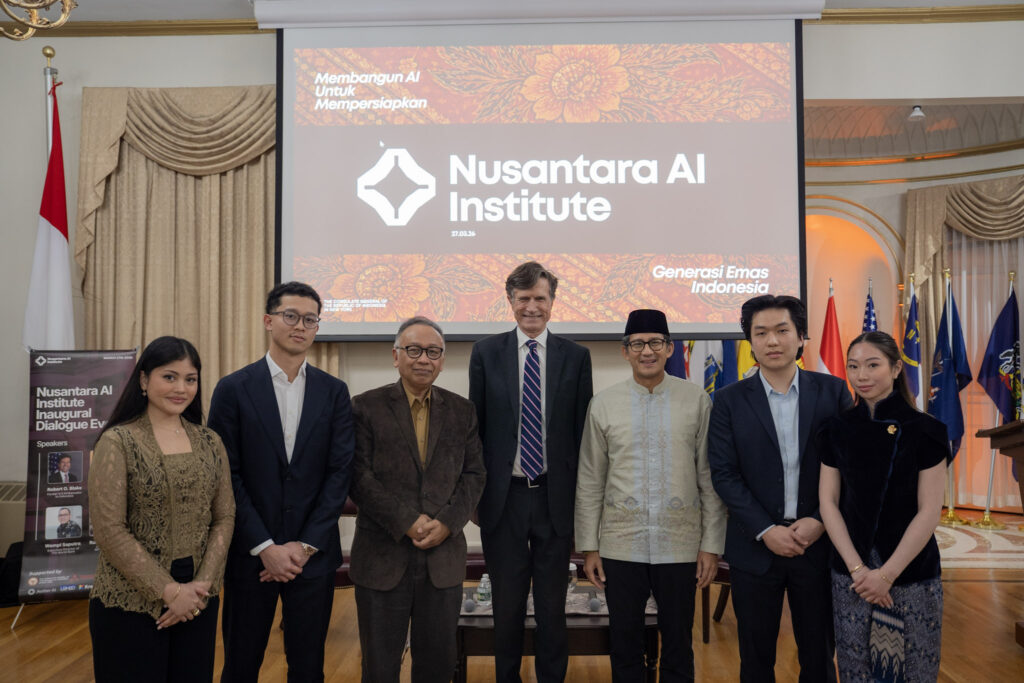
On March 27th, Aether AI formally launched its non-profit arm, the Nusantara AI Institute, at the Consulate General of Indonesia in New York. Bringing together senior diplomats, former U.S. ambassadors, and Indonesian leaders to mark the occasion.
The event was hosted by Winanto Adi, Consul General of Indonesia in New York. Speakers included Sandiaga Uno, former Indonesian Minister of Tourism and Creative Economy, and Ambassador Robert O. Blake Jr., who served as U.S. Ambassador to Indonesia from 2014 to 2016 and delivered the keynote. Ambassador David N. Merril, President of USINDO and former U.S. Ambassador to Bangladesh, joined as a panelist alongside Russel Bradley, Co-Founder of MIT FrED Factor, and Patrick O’Neill, Senior Director at Pitcher.
The event was open to the broader New York community with a shared interest in AI and Indonesia. Indonesian students, working professionals, members of the diaspora, and anyone engaged with the intersection of technology and Indonesia’s development were invited to attend. The goal was to make the conversation accessible beyond formal institutional circles and to connect people who are thinking about these issues from different vantage points.
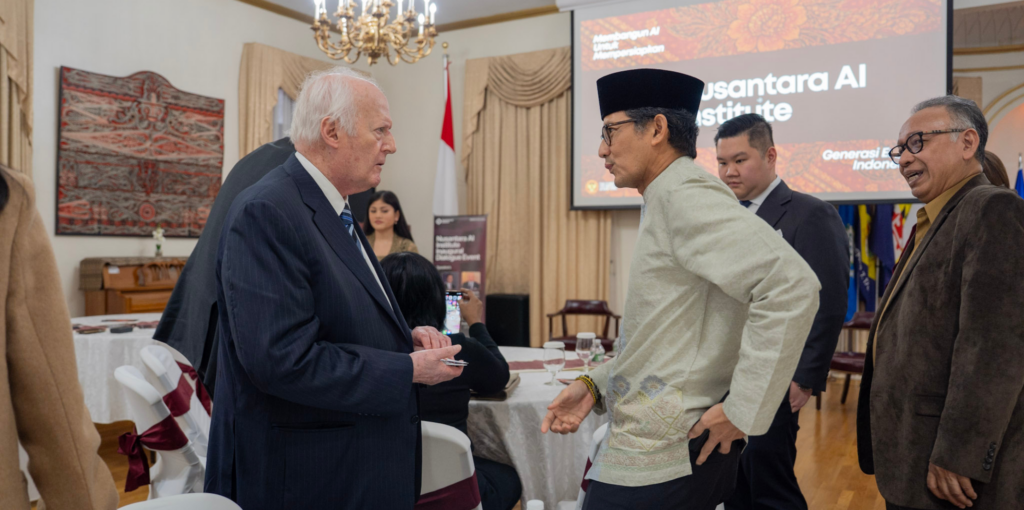
Ambassador David Merrill, Sandiaga Uno
“It is no longer just an extra skill, ” says Sandiaga Uno. “In the future, AI literacy will be a fundamental skill as essential as reading or writing, unlocking new career opportunities across every sector. ”
The Nusantara AI Institute is Aether AI’s non-profit initiative, focused on AI education and literacy across Indonesia. It currently offers 20+ courses across three tracks: AI Literacy, for learners new to the technology; AI for Business, covering workflow automation and operational efficiency; and AI Technical, which goes into machine learning, prompt engineering, and underlying systems.
Discussions at the event covered where AI’s impact is most concentrated in Indonesia, healthcare, education, and micro-enterprise development, and what it takes to move beyond passive use toward genuine applied capability.
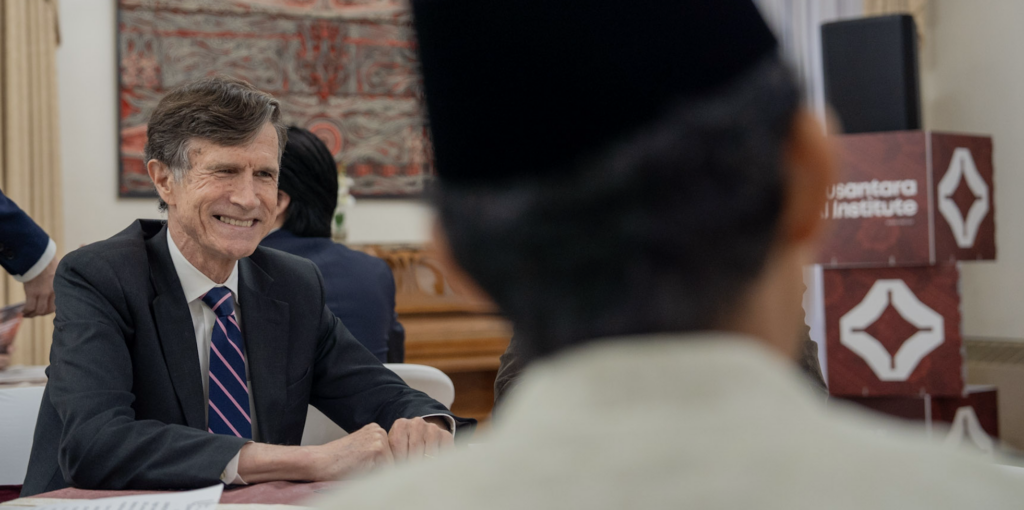
Ambassador Robert O. Blake Jr. (Former United States Ambassador to Indonesia and Maldives)
Ambassador Robert O. Blake Jr. emphasized that fostering AI proficiency is a vital necessity within both emerging and traditional job markets. During his keynote, he explained that a sophisticated understanding of artificial intelligence serves as a fundamental driver for increased productivity, allowing both professionals and organizations to automate routine tasks and reduce operational workloads. Ultimately, this shift toward an “AI-ready” workforce enables a transition from quantitative labor output to high-value, qualitative contributions that better sustain the nation’s economic ambitions.
Indonesia currently maintains a resilient economy underpinned by strategic policies that have successfully stimulated private credit and bolstered domestic consumption. However, the nation faces a significant hurdle in labor inefficiency, as economic growth remains largely contingent on the sheer scale of its 287 million inhabitants rather than specialized technical proficiency. This reliance on demographic volume underscores the urgency of structural evolution to ensure long-term global competitiveness.
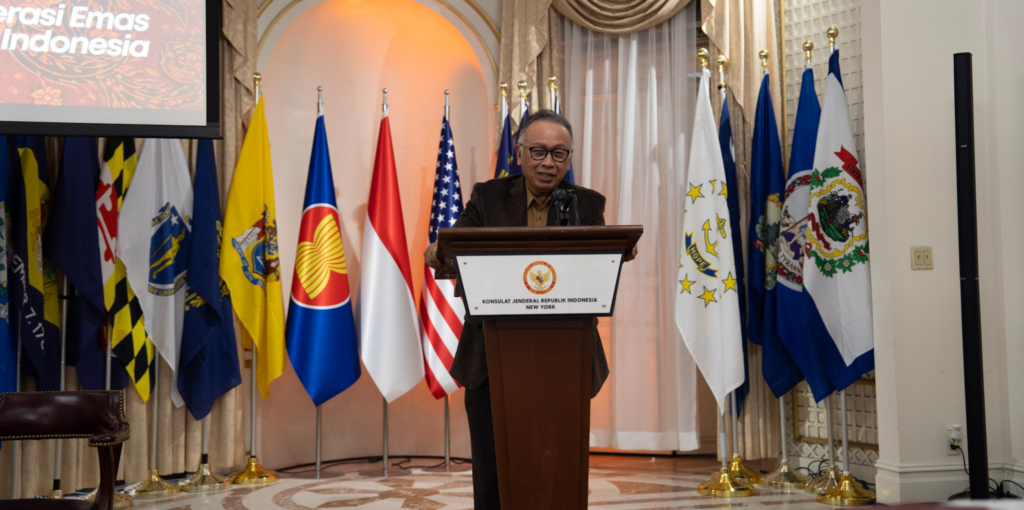
Winanto Adi (Consul General of Indonesia in New York)
Consul General Winanto Adi expanded on the transformative potential of these technologies, highlighting how artificial intelligence can enhance microlearning for micro-enterprises and the vital role of the Indonesian diaspora in guiding this innovation. By encouraging the New York community to deepen their AI proficiency, he noted that they are simultaneously enhancing their personal capabilities and elevating Indonesia’s collective professional potential on the world stage.
Mr. Adi also shared that the Indonesian Consulate has already implemented Aether AI solutions, leading to measurable improvements in operational efficiency. This integration serves as a blueprint for how professional organizations can modernize their internal workflows to remain agile and effective in an increasingly digital landscape.
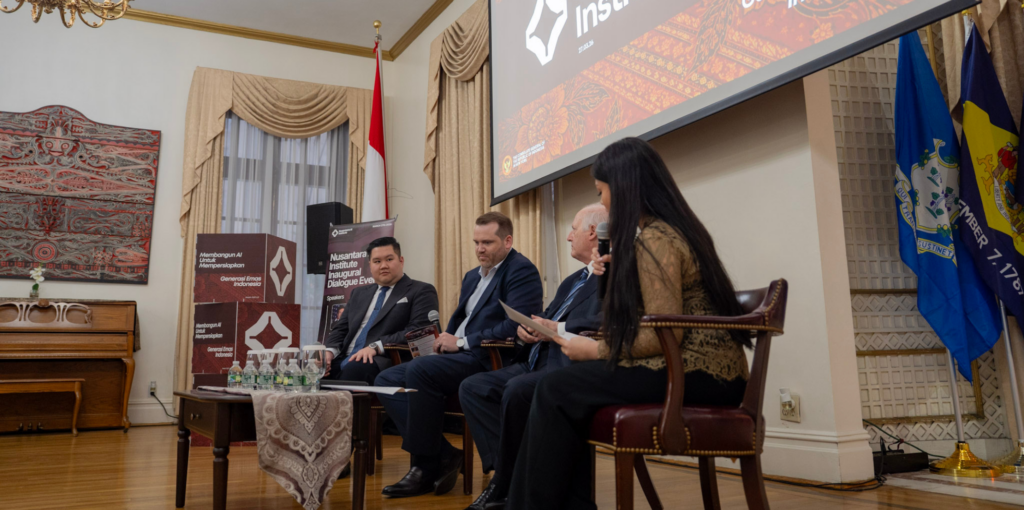
Russel Bradley PhD, Patrick O’Neil, David Merrill, Cahaya Ratomo
Yet, the gap between passive AI usage and its meaningful applications remain clear. In a discussion between Russel Bradley, Co-Founder of the MIT Fred Factory, Patrick O’Neill, Senior Director at AI sales-industry leader Pitcher, and David Merril, panelists emphasized the importance of thoughtful artificial usage and its potential to unlock practical personal impact.
“AI literacy means thinking critically with AI, not just merely using it, ” says Russel Bradley. “In Indonesia, where a broader culture shaped by an education system that often leans toward passive learning persists, the real gap is ensuring AI is used to strengthen problem-solving rather than reinforcing passivity. It isn’t talent or infrastructure, but the ability to translate global AI advancements into local, usable systems, where our role is to identify real problems and bring domain expertise into the loop. ”
Patrick O’Neill and David Merril touch on this point, encouraging Indonesia to learn from the AI landscapes of other countries to prevent potential challenges from emerging in its own growing technological sector.
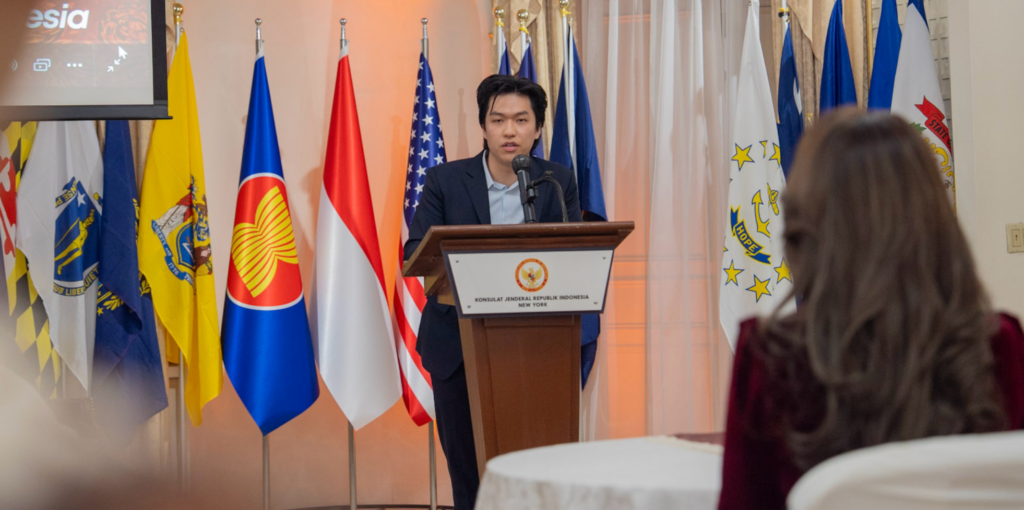
Oliver Tedja (NAII Chairman) at KJRI New York
“Aether AI was built on the belief that AI can solve real problems in emerging markets. But starting NAII was an important extension of that mission. We aim to invest in Indonesia’s human capital, foster meaningful partnerships, and help shape an inclusive digital economy.“
The Institute was built on a straightforward observation: Indonesia has one of the largest and youngest workforces in the world, and the tools being built to serve that workforce in healthcare, enterprise software, financial services, education, are increasingly AI-driven. Yet access to practical, locally relevant AI education has remained limited, concentrated in major cities, and largely disconnected from the realities of how AI is actually being deployed across Indonesian industries.
NAII’s course catalog is designed to close that gap at multiple levels simultaneously, from first-time learners who have never used an AI tool, to business operators looking to automate workflows, to technical practitioners who want to understand the systems underneath. The non-profit structure is intentional: it allows the Institute to prioritize reach and accessibility over revenue, and to build partnerships with institutions, government bodies, and diaspora networks that a commercial entity couldn’t pursue in the same way.
Longer term, the founders see NAII as a platform for bilateral knowledge exchange, not just delivering courses, but fostering the kind of ongoing dialogue between Indonesia and global partners that the March 27th event modelled. The goal is to build something durable: a resource that grows alongside Indonesia’s AI ecosystem rather than getting left behind by it.